How to Choose Your Wedding Date
Your wedding date affects everything — venue availability, vendor pricing, weather, guest attendance, and your overall budget. Here’s how to pick one strategically.
9 April 2026 · 7 min read · Last reviewed April 2026
Key takeaways
- A winter Friday wedding can save $5,000–$15,000 compared to a peak-season Saturday at the same venue.
- Saturday evenings in summer are peak demand — popular venues book out 12–18 months in advance.
- In Australia, summer runs December to February; winter wedding season is June to August.
- Off-peak days (Friday, Sunday, weekdays) typically cost 10–50% less than a Saturday, with no difference in vendor quality.
- Lock in your venue and photographer within 2–4 weeks of deciding your date — they go fast at any time of year.
The biggest factor: peak vs off-peak
Wedding venues and vendors charge based on demand. A Saturday in peak summer can cost 30–50% more than a Sunday in winter — same venue, same food, same photographer. The date you choose is the single biggest lever on cost after guest count.
Peak: Saturday evenings in summer/early autumn. These book first and cost the most.
Shoulder: Fridays, Sundays, and late spring or early autumn. 10–20% less than peak.
Off-peak: Weekdays, winter months, and January (post-holiday). 30–50% less than peak.
Our date picker tool shows peak vs off-peak pricing windows for your country — try a few dates to see the difference.
Season-by-season breakdown
Seasons are flipped between hemispheres. Australia, New Zealand, and South Africa have summer in December–February, while the UK, US, and Canada have it in June–August. Here’s what each season means for your wedding:
Summer
N: Jun–Aug · S: Dec–FebPros
- Long daylight for photos
- Outdoor ceremony options
- Guests more available (school holidays)
Cons
- Peak pricing (20–40% premium)
- Venues book 12–18 months out
- Heat can be uncomfortable for outdoor events
Autumn
N: Sep–Nov · S: Mar–MayPros
- Beautiful foliage and warm light
- Comfortable temperatures
- Shoulder season pricing in many regions
Cons
- Weather can be unpredictable
- Shorter days (plan ceremony timing carefully)
- Popular — still competitive for top venues
Winter
N: Dec–Feb · S: Jun–AugPros
- Lowest venue prices (30–50% less)
- More vendor availability
- Cosy, romantic atmosphere (candles, fireplaces)
Cons
- Limited daylight for outdoor photos
- Weather risks (rain, cold, snow)
- Some guests may struggle to travel
Spring
N: Mar–May · S: Sep–NovPros
- Flowers in bloom (lower florist costs)
- Mild temperatures
- Shoulder pricing in many markets
Cons
- Rain is common in many regions
- Hayfever season
- Easter and school holidays can affect availability
Day of the week matters
Saturday is the default — and the most expensive. But other days can save you thousands:
- Saturday — highest demand, highest price. Book 12–18 months ahead for top venues.
- Friday evening — 10–20% cheaper. Most guests can make it after work. Feels like a weekend wedding.
- Sunday — 10–25% cheaper. Great for brunch or afternoon ceremonies. Guests just need Monday off.
- Weekday (Tue–Thu) — 30–50% cheaper. Best for smaller weddings or destination events where guests are already travelling.
Practical constraints to check
Before you fall in love with a date, run through these:
- Venue availability — your top 2–3 venues may only have specific dates open. Get availability before committing.
- Key guests — check with immediate family and must-have guests before booking anything.
- Public holidays — can be a pro (long weekend for guests) or a con (everything costs more, travel is booked out).
- Religious or cultural dates — Lent, Ramadan, Diwali, Chinese New Year — consider what matters to your families.
- Major sporting events — Grand Finals, the Super Bowl, or the World Cup can split attention (and guest lists).
- School holidays — good if you have guests with kids (they’re free), bad if you want cheaper flights and venues.
- Your own schedule — work commitments, visa timelines, or how long you want to be engaged.
How much lead time do you need?
The further out your date, the more options you have:
- 18+ months — Pick of any venue and vendor. Ideal for peak-season Saturdays.
- 12 months — Comfortable for most weddings. Good selection of vendors.
- 6–9 months — Doable, especially off-peak. Some top vendors may be booked.
- 3–6 months — Tight but possible. Be flexible on day and venue. Cancellation dates can be bargains.
- Under 3 months — Micro-wedding or elopement territory. Restaurants and non-traditional venues have more short-notice availability.
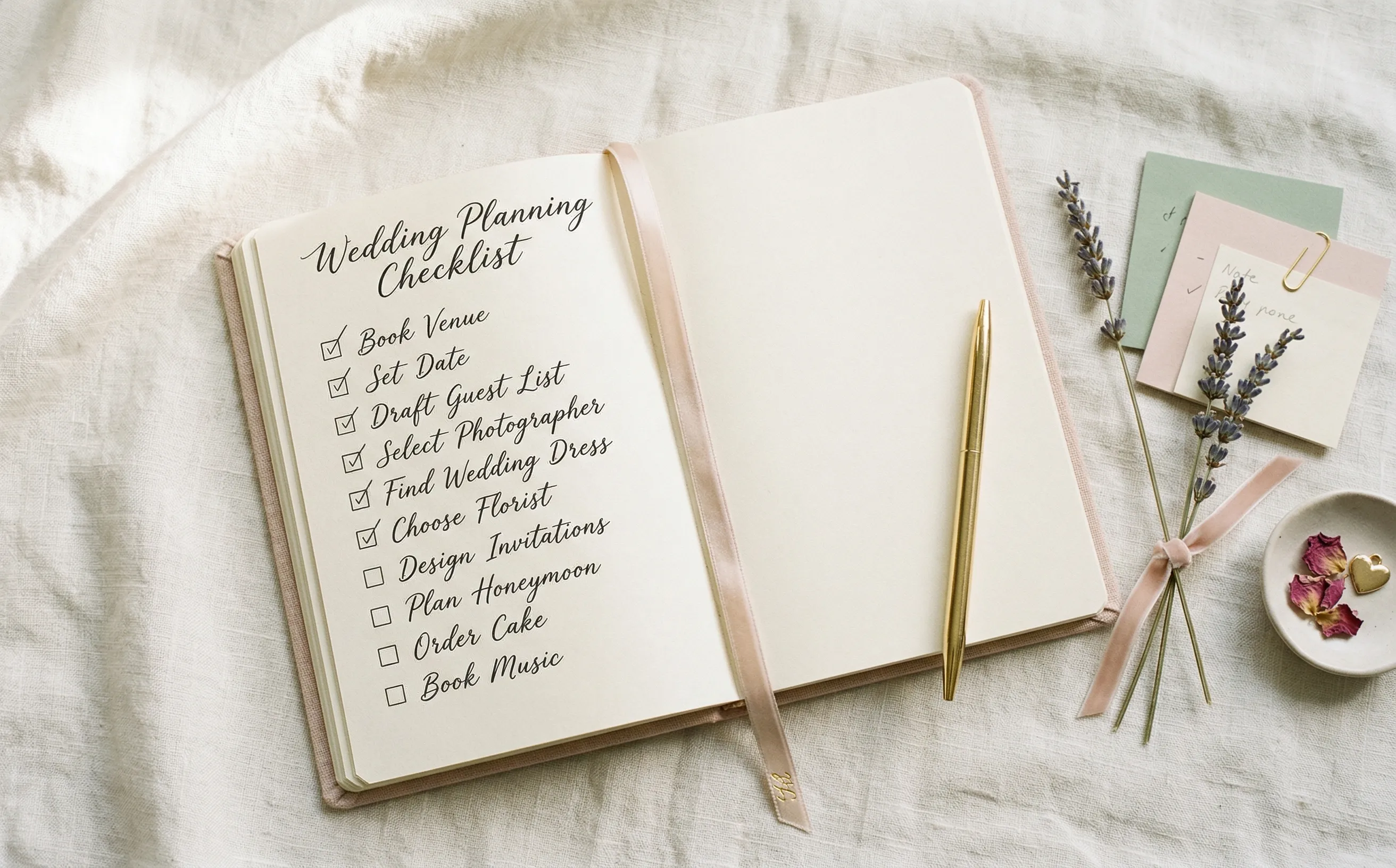
Our wedding planning checklist adapts to your timeline — whether you have 12 months or 6.
The budget connection
Your date directly affects your budget. A winter Friday wedding could save you $5,000–$15,000 compared to a summer Saturday — money you can redirect to photography, food, or the honeymoon.
Run the numbers with our budget calculator — it factors in country and season to give you realistic estimates. For a full cost breakdown, read our guide on how much a wedding really costs.
A framework for deciding
- Set your budget ceiling first. This determines whether you can afford peak season or need to look at off-peak.
- Pick 2–3 possible months based on weather, budget, and personal preference.
- Check venue availability for your shortlisted months. Let venue dates narrow your options.
- Cross-reference with key guests. No point picking a date your parents can’t attend.
- Book and commit. Once you have a date, lock in your venue and top vendors immediately — they go fast.
Frequently asked questions
What is the cheapest time of year to get married in Australia?
June to August (winter) is the cheapest time to get married in Australia, with venue hire typically 30–50% less than summer peak pricing. Weekdays in winter offer the greatest savings. The trade-off is shorter daylight hours and cooler weather — but many couples save $10,000–$20,000 by choosing this window.
How far in advance should you book a wedding venue in Australia?
For popular venues in Melbourne and Sydney, book 12–18 months ahead for peak Saturday dates. Off-peak (winter, Sunday, Friday) bookings can often be secured 6–9 months out. Regional venues tend to have more flexibility. Once you have a date in mind, venue availability should be your first call.
Is it cheaper to get married on a Friday or Sunday?
Both Friday and Sunday typically cost 10–25% less than a Saturday at the same venue. Sundays work well for afternoon or brunch ceremonies. Fridays feel like a long weekend for guests who take Monday off. The savings are real — a $15,000 venue hire may drop to $11,000–$12,000 on a Sunday.
What season is best for outdoor weddings in Australia?
Autumn (March–May) and spring (September–November) offer the best conditions for outdoor weddings in most of Australia — mild temperatures, lower chance of extreme heat, and good light. Summer outdoor events in Victoria and NSW can be extremely hot; have an indoor backup plan ready.
Do wedding vendors charge more for peak dates?
Most venues and some vendors (caterers, marquee hire) charge peak and off-peak rates. Photographers and celebrants often charge the same regardless of date, but the most in-demand ones may require minimum spend or package commitments for peak Saturdays. Always ask vendors about date-specific pricing upfront.
Ivory Lane Editorial
The Ivory Lane editorial team covers wedding planning, budgeting, and vendor advice for Australian couples. Our content is reviewed for accuracy against current AU industry pricing and updated regularly.