The Complete Wedding Planning Checklist
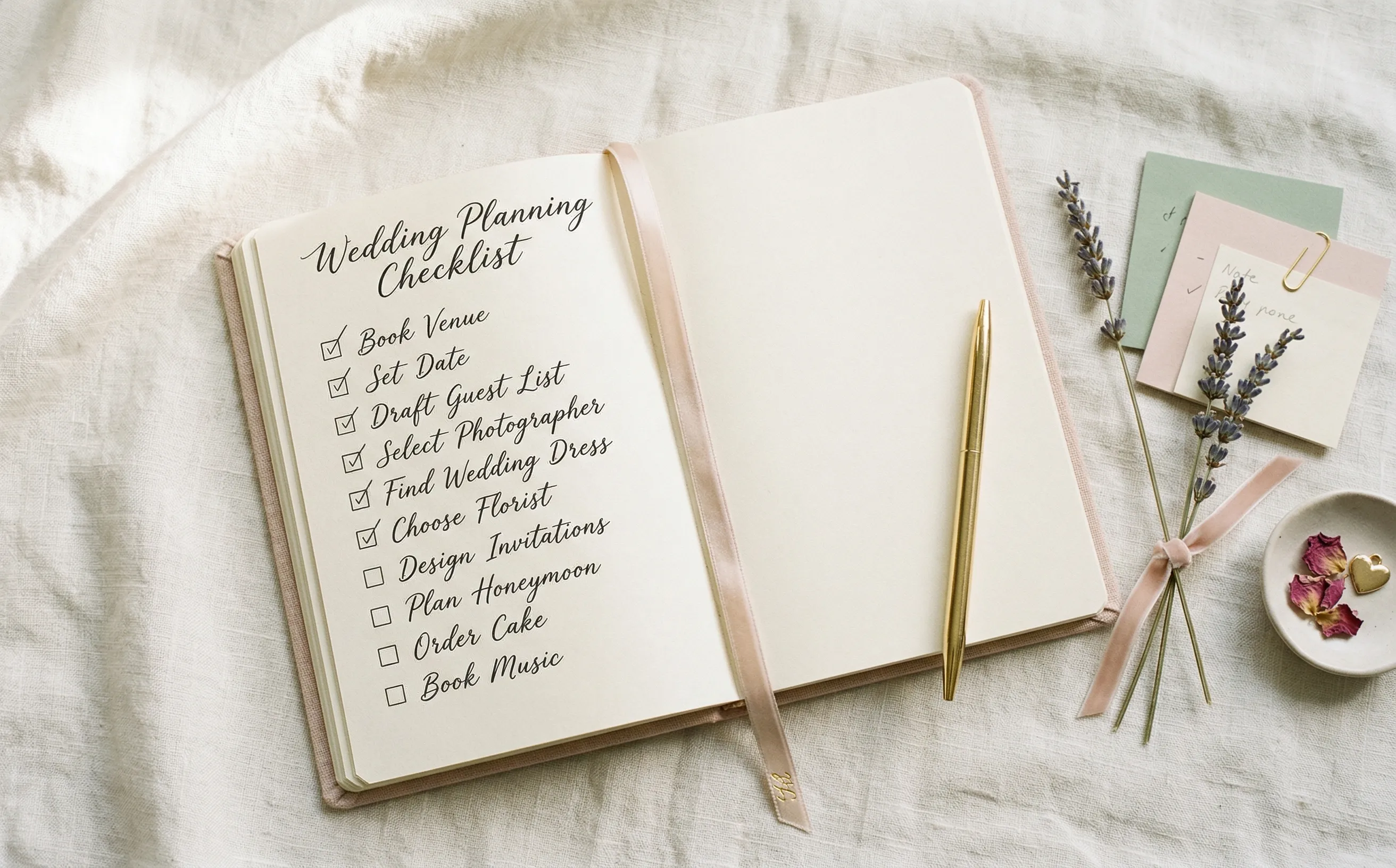
Every task you need to do, in the order you need to do them. This checklist works whether you have 12 months or 6 — adjust the timeline to fit your wedding date.
9 April 2026 · 10 min read · Last reviewed April 2026
Key takeaways
- Book venue, celebrant, photographer, and attire first — these are the hardest to secure and have the longest lead times.
- In Australia, a Notice of Intended Marriage must be filed 1–18 months before the wedding date.
- If you have less than 12 months, prioritise venue and photographer immediately — availability is the main constraint.
- Wedding insurance should be purchased as early as possible, before any vendor issues arise.
- Delegate all day-of coordination tasks so you can be present on your wedding day rather than managing it.
How to use this checklist
This is a general timeline — not every task applies to every couple, and your order might shift depending on venue availability, cultural traditions, or how far in advance you’re planning.
Short timeline? If you have less than 12 months, compress the first two phases and prioritise venue, celebrant, photographer, and attire — everything else can flex.
Want an interactive version? Our free wedding checklist tool lets you pick your scenario (12-month, 6-month, destination, elopement) and tick off tasks as you go — with a downloadable PDF.
📋12–10 months before
- Set your total budget and agree on priorities with your partner
- Draft an initial guest list (even a rough number helps)
- Research and book your ceremony and reception venues
- Book your celebrant or officiant
- Start researching photographers and videographers
- Take out wedding insurance (easier to get early)
- Create a shared planning space — spreadsheet, app, or notebook
🎵9–7 months before
- Book your photographer and videographer
- Book entertainment — band, DJ, or both
- Start dress or suit shopping (allow 6+ months for orders)
- Choose your wedding party and ask them
- Research and book your florist
- Send save-the-dates (digital or printed)
- Plan your honeymoon and book flights if travelling far
- Research hair and makeup artists — book trials
✉️6–4 months before
- Send formal invitations (aim for 8 weeks before for RSVPs)
- Book your cake or dessert supplier
- Arrange transport — bridal car, guest shuttles, parking
- Choose and order wedding rings
- Plan your ceremony — readings, vows, music
- Book accommodation for out-of-town guests
- Finalise your menu with the caterer (tastings!)
- Start planning your seating chart (yes, this early)
- Register for gifts or set up a wishing well
💐3–2 months before
- Chase RSVP stragglers — you need final numbers
- Finalise the seating plan
- Confirm all vendor bookings and review contracts
- Do hair and makeup trials
- Arrange dress or suit fittings and alterations
- Plan your reception — speeches, first dance, timeline
- Write thank-you speech notes
- Apply for your marriage licence (requirements vary by country)
- Organise table settings, signage, and stationery
🗓️1 month before
- Confirm final guest count with all vendors
- Create a detailed wedding day timeline
- Brief your wedding party on roles and timeline
- Do a venue walkthrough if possible
- Prepare final payments for vendors
- Break in your wedding shoes (seriously)
- Pack for the honeymoon
- Prepare an emergency kit (sewing kit, painkillers, tissues, snacks)
💍The week before
- Confirm delivery times and setup details with all vendors
- Give the venue your final seating plan and timeline
- Hand off the day-of timeline to your MC or coordinator
- Delegate tasks so you're not managing anything on the day
- Prepare envelopes with final vendor payments and tips
- Lay out everything you'll need on the morning — outfit, accessories, rings
- Breathe. You've done the work. Enjoy it.
🎉After the wedding
- Send thank-you cards (within 2–3 months)
- Change your name if applicable (licence, bank, passport)
- Preserve your dress or suit if you want to keep it
- Collect and back up your photos and videos
- Leave vendor reviews — they helped make your day
- Claim wedding insurance if anything went wrong
- Update your will, beneficiaries, and shared accounts
Adapting this for your country
The core tasks are universal, but legal requirements vary. Marriage licence timelines, name-change processes, and vendor booking lead times differ between Australia, the UK, US, Canada, and New Zealand.
- Australia — Notice of Intended Marriage must be filed 1–18 months before. Celebrant handles paperwork.
- United Kingdom — Give notice at your local register office at least 29 days before (some areas require more).
- United States — Marriage licence requirements vary by state. Some require a waiting period, others don’t.
- Canada — Licence requirements vary by province. Some require witnesses, some don’t.
- New Zealand — File a Notice of Intended Marriage at least 3 working days before.
What most people forget
The big things — venue, dress, photographer — are obvious. It’s the smaller tasks that catch people out:
- Wedding insurance (get it early, before anything goes wrong)
- Breaking in your shoes (dance floors + new shoes = blisters)
- Emergency kit on the day (sewing kit, painkillers, phone charger)
- Delegating day-of tasks so you’re not coordinating your own wedding
- Name change paperwork — it takes longer than you think
For the full list of hidden expenses, use our hidden costs calculator.
Pair this with a budget
A checklist tells you what to do. A budget tells you what you can afford. The two work together — as you book vendors, update your budget so you always know where you stand.
Read our guide on how much a wedding really costs for country-by-country averages, or try the budget calculator for a personalised breakdown.
Build your wedding day timeline
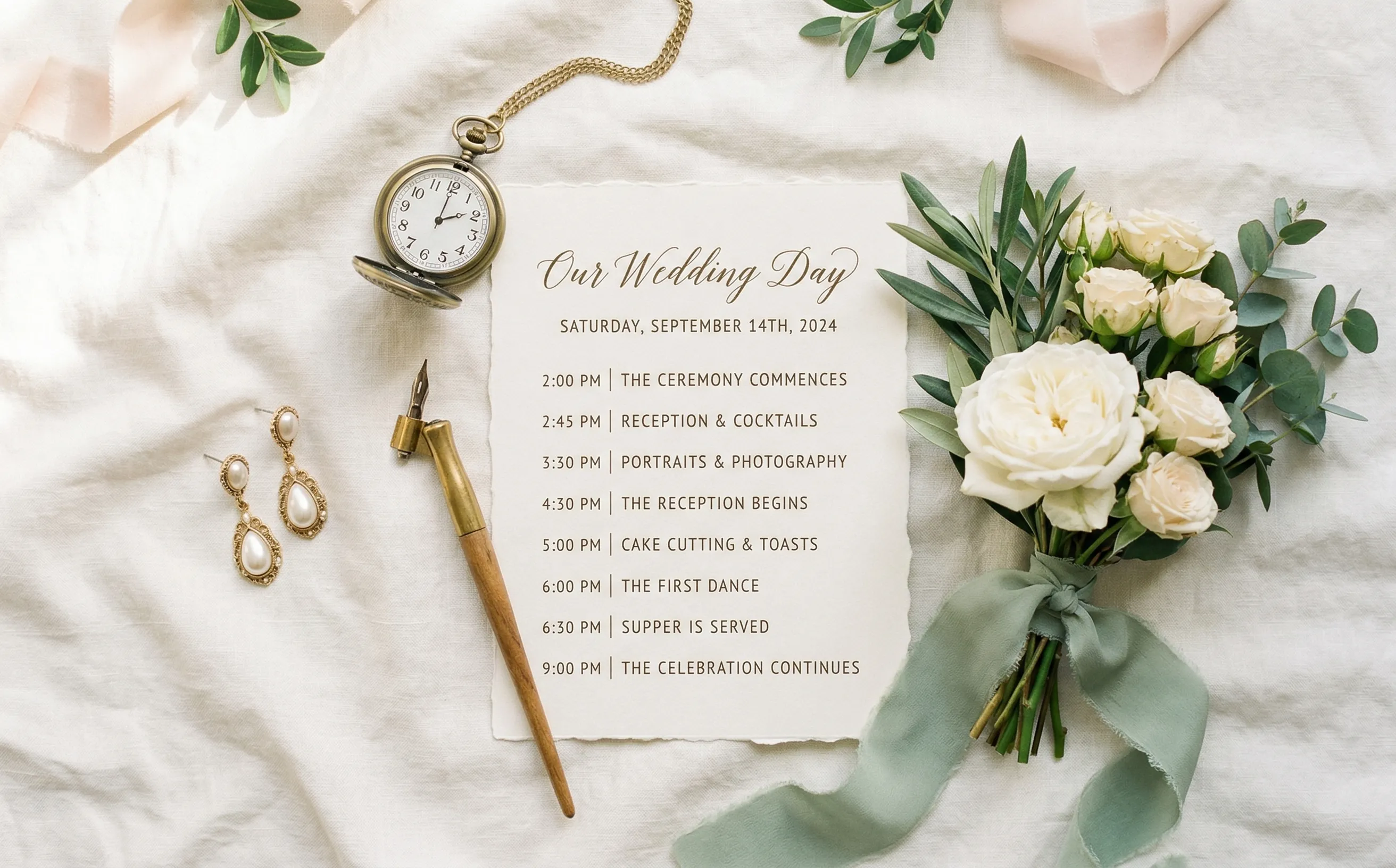
Once you’re in the final month, you’ll need an hour-by-hour plan for the day itself — ceremony, photos, reception, speeches, first dance. Our wedding day timeline guide walks through exactly how to structure it, or use the timeline builder tool to generate one in minutes.
Frequently asked questions
How far in advance should you start planning a wedding?
12–18 months is ideal for most Australian couples, particularly if you want popular venues, photographers, or a specific date. Popular venues in Melbourne and Sydney can book out 12–18 months in advance. If you have 6 months, it is still very achievable — prioritise venue, celebrant, and photographer first.
What is the first thing to do when planning a wedding?
Set your budget and a rough guest count before booking anything. These two decisions determine every other choice — your guest count drives venue size requirements, and your budget determines which venues and vendors are realistic. Getting these agreed with your partner first prevents anchoring to options you cannot afford.
How long before a wedding do you need to file a Notice of Intended Marriage in Australia?
In Australia, a Notice of Intended Marriage (NOIM) must be lodged with your celebrant at least 1 month before the ceremony and no more than 18 months in advance. Your celebrant submits this on your behalf. You will also need to provide ID documents (passport, birth certificate) when signing.
What should be on a wedding day emergency kit?
A well-stocked wedding day kit includes: safety pins, a needle and thread, stain remover pen, painkillers, blister plasters, double-sided tape, a phone charger, tissues, breath mints, snacks, and cash for tips. Delegate someone in your bridal party to carry it — not you.
When should you send wedding invitations?
Send formal invitations 8–10 weeks before the wedding, with RSVPs requested 4–6 weeks before. For destination weddings or events around public holidays, send 3–4 months ahead. Save-the-dates should go out 6–12 months before to give guests time to arrange travel and accommodation.
Ivory Lane Editorial
The Ivory Lane editorial team covers wedding planning, budgeting, and vendor advice for Australian couples. Our content is reviewed for accuracy against current AU industry pricing and updated regularly.