
How to Choose a Wedding Venue: 20 Questions to Ask
Your venue is the single biggest wedding decision — it determines your budget, guest count, catering, and the entire feel of the day. These 20 questions reveal what brochures don’t tell you.
5 February 2026 · 11 min read · Last reviewed April 2026
Key takeaways
- Your venue determines budget, guest count, catering options, and the aesthetic of your entire day — book it before any other vendor.
- Venue and catering typically take 40–50% of your total budget; know your ceiling before you tour a single property.
- Always visit at the same time of day as your wedding — lighting, noise levels, and atmosphere change dramatically between morning and evening.
- Always ask about hidden fees: corkage, packdown, public holiday surcharges, and overtime can add $1,000–$3,000 to the quoted price.
- Shortlist 3–5 venues and visit all of them before committing — comparison is the only way to know if a quote is fair.
Before you visit: set your constraints
Don’t fall in love with a venue you can’t afford or one that doesn’t fit your guest count. Before booking a single tour:
- Set your budget. Venue and catering typically take 40–50% of your total. Use the budget calculator to see what that means in dollars.
- Estimate your guest count. Even a rough number narrows your venue options dramatically.
- Pick a season. Off-peak months give you more choice and lower prices. Check our wedding date guide for seasonal pricing.
- Shortlist 3–5 venues based on budget, capacity, and location. Visit all of them before committing.
The 20 questions
What is the total venue hire fee, and what does it include?
Some venues quote a "starting from" price that excludes tables, chairs, linen, and staff. Get a line-item breakdown so you can compare apples to apples.
Are there any additional or hidden fees?
Corkage, cake cutting fees, cleaning fees, setup/packdown charges, public holiday surcharges. Ask specifically — these can add $1,000–$3,000.
What is the maximum capacity for ceremony and reception?
Seated dinner capacity is usually less than cocktail capacity. Make sure the venue fits your guest count comfortably for both parts of the day.
What is the minimum guest count or spend?
Many venues require a minimum food and beverage spend. If your guest list is 60 but the minimum is designed for 100, you'll pay for 100.
Do you have a wet weather backup?
If you're planning an outdoor ceremony, this is non-negotiable. "We'll move inside" is only acceptable if "inside" is genuinely good enough.
What time can we access the venue for setup?
If your florist needs 3 hours and you get 1 hour of access, there's a problem. Check whether setup time is included or costs extra.
What time must everything be packed down?
If the venue shuts at 11pm and packdown takes an hour, your last dance is at 10pm. Know the curfew before you book.
Are there noise restrictions or a curfew?
Some venues in residential areas have strict noise limits after 10pm. This affects your band/DJ and whether outdoor after-parties are possible.
Do you have exclusive catering, or can we bring in external vendors?
Exclusive catering means you must use their kitchen. This limits your options and removes price competition. Some couples prefer the convenience; others want choice.
Can we do a tasting before committing?
If the venue does the catering, you should taste the food before signing a contract. Good venues offer this as standard.
Is there on-site accommodation?
Useful for the couple and bridal party. Also important for guests if the venue is remote — are there hotels nearby?
What parking is available for guests?
Inner-city venues may have no parking. Rural venues may have a muddy field. Know what your guests are in for and whether you need shuttles.
Can we hold both the ceremony and reception here?
One venue for everything is simpler, cheaper, and means no guest transport between locations. But dual-venue weddings can create a nice change of scenery.
What is your cancellation and rescheduling policy?
Post-COVID, this matters more than ever. Understand what happens to your deposit if you need to change the date.
Do you have liability insurance?
Professional venues carry public liability insurance. If something goes wrong (a guest trips, a structure collapses), the venue's insurance should cover it.
Can we visit the venue at the same time of day as our wedding?
A venue looks different at 2pm vs 7pm. Natural light, noise levels, and ambiance change dramatically. Visit at the time you'd actually be there.
How many other events happen on the same day?
Some venues run two weddings on the same day (one morning, one evening). Ask whether you'll be sharing the space, bathrooms, or parking.
What is the payment schedule?
Typical: 10–30% deposit at booking, balance due 2–4 weeks before. Know the milestones so you can plan cash flow.
Who is our point of contact on the day?
You want a dedicated venue coordinator who knows your timeline and can handle problems without involving you.
Can we see photos or videos from recent weddings here?
Marketing photos are styled to perfection. Ask for real wedding galleries to see what the venue actually looks like when 100 guests are in it.
Venue types compared
| Type | Pros | Cons | Budget |
|---|---|---|---|
| Hotel / ballroom | All-inclusive (catering, accommodation, coordination), wet weather proof, established systems | Can feel generic, limited personalisation, exclusive catering | $$$ |
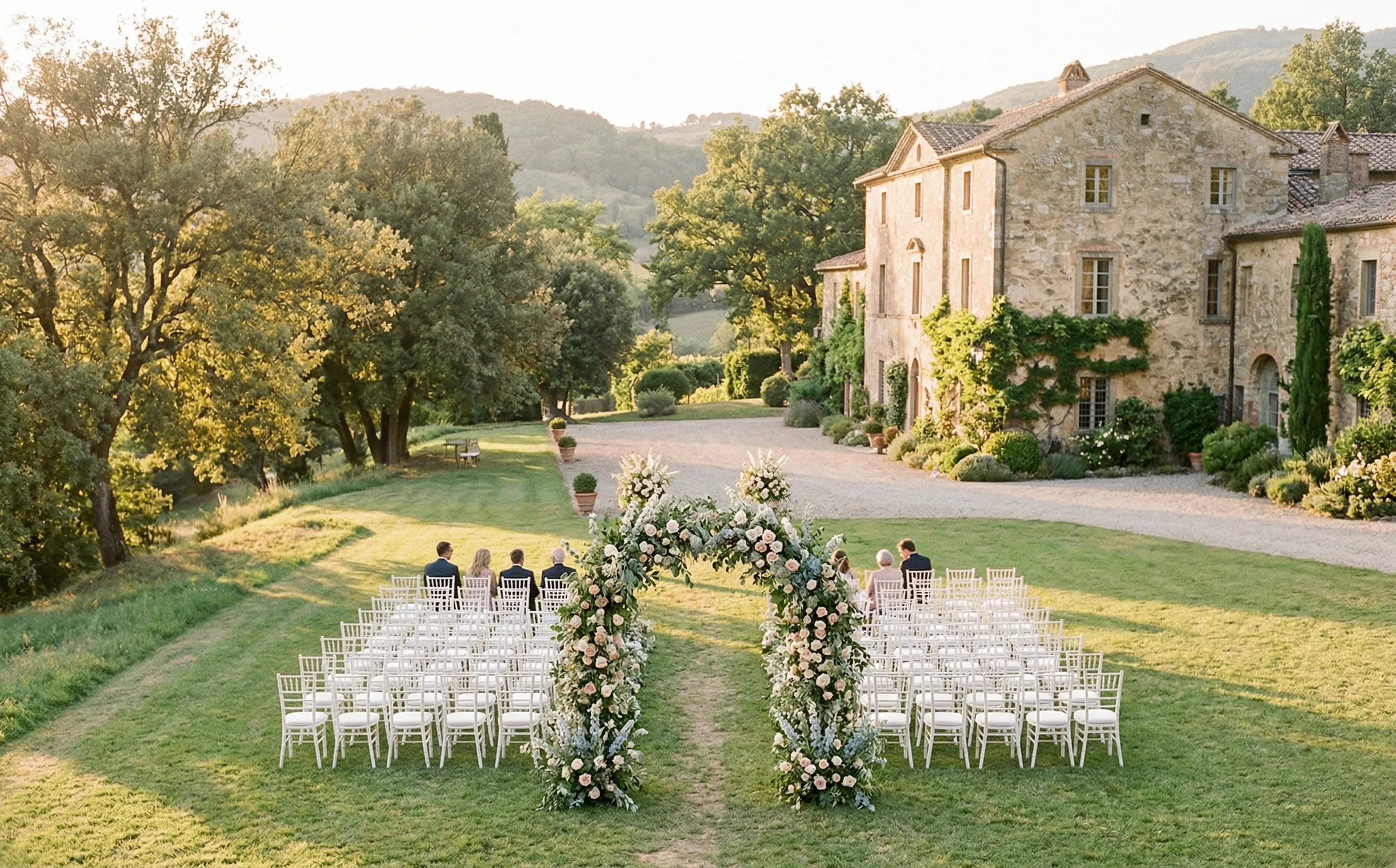
| Garden / estate | Beautiful scenery, photo opportunities, unique atmosphere | Weather dependent, may need external vendors, limited infrastructure | $$–$$$ |
| Restaurant | Food quality guaranteed, intimate feel, usually affordable | Capacity limits, less flexibility on timing, no ceremony space | $$ |
| Barn / farm | Rustic charm, large flexible spaces, usually BYO-friendly | May need everything hired separately, limited amenities, access roads | $–$$ |
| Winery / vineyard | Stunning backdrops, good food and wine, photo-ready | Remote locations, seasonal availability, exclusive catering common | $$–$$$ |
| Gallery / warehouse | Blank canvas, modern aesthetic, flexible layouts | May need everything hired (chairs, tables, catering), echo/acoustics | $$ |
Red flags during a venue tour
- Pressure to book on the spot. Good venues are in demand, but “someone else is looking at this date” is a sales tactic.
- Vague pricing. If they can’t give you a clear per-head or total price, the final bill will surprise you.
- No wet weather plan. “It never rains here” is not a plan.
- Won’t let you visit at your event time. If they only show the venue at 10am for an evening wedding, ask why.
- Bad online reviews about coordination. Beautiful spaces with poor coordination create stressful weddings.
After you book
Once the venue is locked in, everything else follows — caterer, photographer, florist, timeline. Track all your vendors, contracts, and payments in one place with Ivory Lane’s vendor tracker.
For the complete vendor booking guide, read our article on 50 questions to ask every wedding vendor.
Sources
- The Knot — How to Choose Your Wedding Venue
- Brides — Venue Selection Guide
- Easy Weddings — Choosing a Venue in Australia
Frequently asked questions
How do I choose a wedding venue I can afford?
Set your total budget ceiling first, then calculate 40–50% for venue and catering combined. That's your venue budget in dollars. Filter your shortlist by capacity and budget before touring — there's no point falling in love with a venue that eats 65% of your total before catering is even added. Get full quotes (not "starting from" prices) from at least 3 venues.
What are the most important questions to ask a wedding venue?
Ask: what is the total hire fee and what does it include; are there hidden fees (corkage, packdown, overtime); what is the wet weather backup; what time is access and packdown; do you have exclusive catering; how many events run on the same day; and who is our on-the-day contact. Get all answers in writing before signing.
Which type of wedding venue is most affordable?
Barn and farm venues are typically the most affordable, followed by restaurants and gallery spaces. Hotels and dedicated wedding venues sit at the premium end. Note that cheaper bare-bones venues often require you to hire everything separately (tables, chairs, catering, AV) — factor this in before comparing quotes.
What are red flags when touring a wedding venue?
Watch for: vague or shifting pricing, pressure to book on the spot, no clear wet weather backup, reluctance to let you visit at your event time, negative reviews about coordination, and sharing facilities (bathrooms, parking) with another wedding on the same day. A professional venue welcomes every question and provides clear written answers.
How far in advance do you need to book a wedding venue in Australia?
Popular venues in Melbourne and Sydney book out 12–18 months in advance, especially for Saturday dates in spring and autumn (September–November, March–May). If you have a specific date or venue in mind, 12–18 months is the safe minimum. Regional venues and off-peak dates (Friday, winter months) can often be secured 6–9 months out.
Ivory Lane Editorial
The Ivory Lane editorial team covers wedding planning, budgeting, and vendor advice for Australian couples. Our content is reviewed for accuracy against current AU industry pricing and updated regularly.